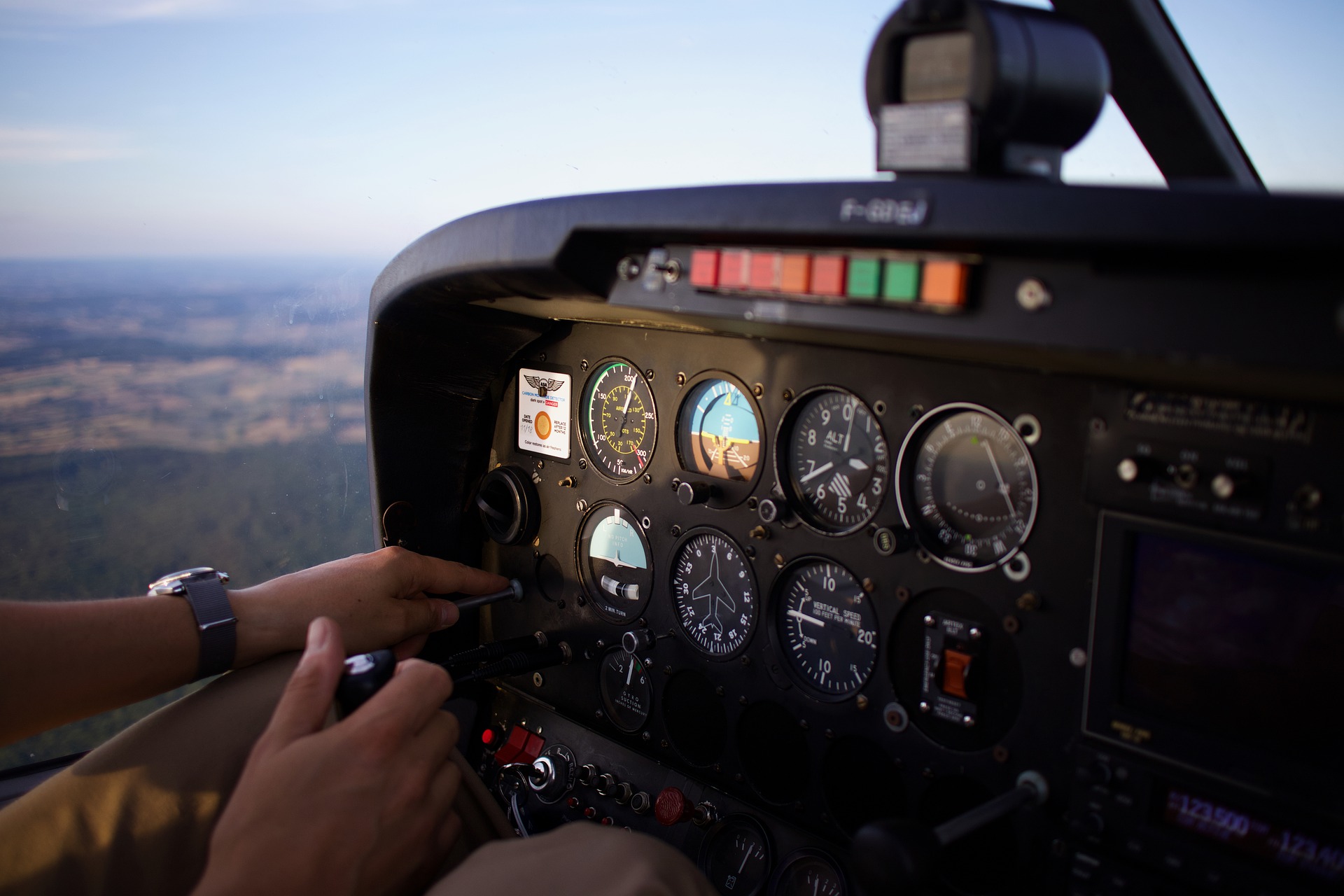
Like many other industries, aviation is experiencing a technological revolution. That is seen from the ongoing trends that you will find in airports and other aviation fields. Each hi-tech advancement made is intended to streamline the aviation industry and change the overall operation of the sector. To clarify, here is a list of technological trends currently shaping the aviation industry.
Introduction of Blockchain in Aviation
The future of blockchain is predetermined, which is why sectors such as aviation are already incorporating it in their operations. According to key aviation stakeholders, the industry is expected to use blockchain to improve record keeping. Also, aviation is currently relying on blockchain for data security. Those are just a few advantages of blockchain in aviation. Currently, the industry is taking strides to make sure the trend is completely embedded in aviation operations for the seamless functionality of the industry and its subsidiaries.
Virtual and Augmented Reality in Aviation and Online Sportsbooks
In the ever-evolving landscape of technology, it comes as no surprise that virtual reality (VR) and augmented reality (AR) have found their place in the aviation industry. These innovative technologies offer a myriad of applications that benefit both passengers and companies alike.
Augmented reality, for instance, is being seamlessly integrated into air traffic control systems to enhance the safety protocols on airport runways. Similarly, online sportsbooks have embraced augmented reality features to provide sports enthusiasts with immersive experiences, ensuring a safe and secure platform for their betting activities.
Conversely, virtual reality has become an invaluable tool for pilots, offering them realistic aircraft simulations that aid in honing their skills and understanding of airplane control mechanisms. Just as pilots benefit from VR simulations, sports betting enthusiasts can immerse themselves in virtual environments where they can analyze statistics, follow live events, and place bets on their favorite sports, including exploring the best online sportsbooks in Pennsylvania.
Moreover, passengers are leveraging VR technology to effortlessly navigate through intricate airport layouts, streamlining their travel experiences. Similarly, online sportsbooks employ virtual reality environments to enhance the betting experience, allowing users to visualize sporting events and make informed decisions from the comfort of their homes. This seamless integration of technology enhances the operational efficiency of various sectors within the aviation industry and the online sports betting realm alike.
Artificial Intelligence
A.I. is one of the main technologies being used in aviation, and its input is proving to be overly helpful. At the moment, airports are using A.I. tools to read passport details and fill out fliers. Moreover, other airports are using digital assistance made using artificial intelligence to ensure the smooth functionality of some airport areas. Overall, artificial intelligence is meant to facilitate data entry, data collection, and information management while minimizing errors. Researchers are also making in-depth analyses to find out other areas that A.I. can be beneficial.
Biometrics
In a move to completely transform the passenger experience, the aviation industry is using biometrics in nearly every touchpoint. Not only is the technology being deployed to ensure airport security but also to guarantee passenger health. Moreover, biometrics are being applied for data collection. The information is then compared to data on a larger database for certainty. So far, Delta was among the first airports to incorporate biometric systems at different checkpoints and touchpoints of the airport. Since then, the number of airports using biometrics technology has risen significantly.
Beacons Tech
It has always been hard for airport authorities and staff to man the facilities and knows the location of different passengers. Thanks to beacon technology, that will no longer be a problem. That is because the technology helps airport staff and attendants know passengers’ exact location while travelling from one terminal to the next. It hence becomes easy for airport management to send passengers specific information. For instance, customers can receive guidance regarding the nearest eateries at the airport and the boarding gate numbers. As a result, customer experience is amplified, and so is the operation efficiency of the airport. Miami airport already has beacons placed at different areas of the facility. The staff is already using the technology to increase passenger experience. More airports are expected to implement the same in the next few years.
Big Data
Big data is one of the most implemented technologies in aviation. Airports are currently using big data to collect and analyze passenger habits. After that, the information assembled is used to provide their consumers with customized offers. So far, United Airlines is already using big data technology, and that has seen the airport increase its revenues by 15%. That is because, after a keen analysis of information, perfect products are formulated. It thus becomes nearly impossible for customers to pass the offers. Also, airports are using big data with predictive analysis to provide customers with exactly what they require. Airports understand that the more information is collected, the better the customization. That is why they continue to collect customer information.
Those are just a few technological trends currently being used by the aviation industry to ensure customer satisfaction. Other trends include IoT application, the use of mobile solutions, and the introduction of wearables. The incorporation of the listed technologies is supposed to increase efficiency in different sectors of the aviation industry.